relationships
Family Recipe Journal: Record the Stories Behind the Food
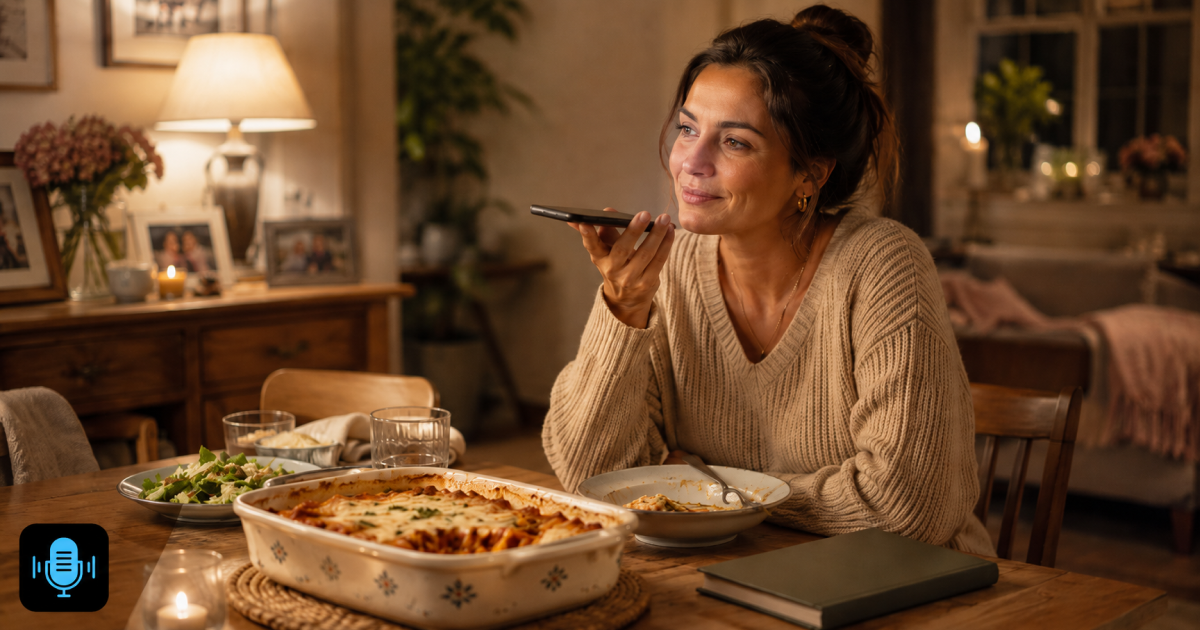
family recipe journalfood memory journalfamily storiesrecipe memoriesvoice journaling
The written recipe says two cups, one spoonful, and twenty minutes on the stove. It may not say who first taught you the dish, why it appeared at every family celebration, or which small change became part of your householdâs version.
A recipe can preserve ingredients and steps while losing the personal context around it: who taught it, when the family made it, what changed over time, and why the dish matters. Without a separate reflection, those details may remain outside the written recipe.
A family recipe journal gives those stories somewhere to live. It does not need to replace a recipe book or repeat every cooking instruction. Instead, it can hold short reflections about the people, occasions, conversations, and memories connected to selected dishes.
With JournPad, you can record those reflections as voice entries linked to one goal. The audio remains your primary journal record, and you can revisit each entry later. JournPad does not extract a recipe from your recording, organise a cookbook, or share the entries with relatives.
What should you record in a family recipe journal?
Record the context that a list of ingredients would not explain. Depending on the dish, that might include:
- Who taught you to prepare it or who you associate with it.
- The occasions when your family normally serves it.
- A memory connected to making, sharing, or eating it.
- A change your household made to the original version.
- A phrase, habit, or small ritual you want to remember.
- A question you want to ask a relative next time.
- What the dish means to you personally.
This is a small selection, not a checklist. One entry may focus entirely on the person who taught you. Another may preserve a story told during lunch. Choose the detail that matters that day and stop when you have recorded enough.
Keep the recipe and the reflection in their proper roles
If you need exact quantities, temperatures, timings, allergy information, or step-by-step instructions, keep them in an appropriate recipe or cooking system. A JournPad voice entry is not a substitute for precise instructions you may need while preparing food.
Use the journal for the surrounding story. You might describe how your grandmother judged the texture without measuring, why your family changed one ingredient after moving to another country, or what everyone talked about the last time the dish was served.
JournPad does not automatically identify ingredients, convert speech into a formatted recipe, compare different versions, or make nutritional or cooking recommendations.
Five prompts for the stories behind a dish
Choose one or two prompts that fit the moment. You do not need to answer all five in every recording.
1. Who taught me this dish, or who do I associate it with?
Begin with the person or people connected to the food. Record how you learned the dish, what you remember about watching them prepare it, or why their version remains meaningful to you.
Keep the reflection respectful. You do not need to include private information about another person simply because they are part of the memory.
2. When did this dish appear in our family life?
Think about the setting. Was it served during ordinary evenings, weekend visits, religious or cultural occasions, school holidays, birthdays, or another recurring moment? Record one specific scene rather than summarising the familyâs entire history with the dish.
3. What changed in our version over time?
Describe one change as you remember it without presenting your reflection as the single official version.
For example: âMy aunt uses less spice than my grandmother did, and that became the version we usually make at home.â
4. What happened around the table that I want to remember?
The memorable part may be a conversation, a joke, who helped serve, or the way someone reacted when they tasted the dish again. Focus on the part you want your future self to hear, leaving out details another person would reasonably expect to remain private.
5. What should I ask or record next time?
Finish with one open question. You may want to ask who first introduced the recipe, why a certain occasion became connected to it, or which variation another relative remembers.
The question remains part of your reflection. JournPad does not send it to anyone or create a family-research task from it.
Create a family recipe-story goal in JournPad
One practical workflow is to connect these reflections to a single goal.
Create a goal called Family Recipe Stories or Food Memories. A goal has a category, but it is not a separate workspace or shared family folder.
When you have a story to record, open that goal and create a new voice entry from inside it. JournPad automatically links the new entry to the goal. You do not manually attach an older entry afterward, and the app does not decide which goal the entry belongs to.
The goal-linked entry also remains visible in the relevant Day, Week, and Month views according to its recording date.
Add a reminder only if it matches your routine
If your family regularly cooks together, a weekly goal reminder may provide a useful cue. A daily reminder could fit a concentrated period of recording, but it is not necessary for everyone.
Goal reminders can use daily or weekly recurrence and may support multiple scheduled times. They prompt you to journal; they do not create entries or confirm that a dish was prepared. For a fuller explanation, see Set JournPad Goal Reminders for Daily or Weekly Reflection.
Record after cooking or sharing the meal
Choose a time when you are finished handling hot equipment and can speak without interrupting the people around you. Open the goal, select one or two prompts, and record the story you want to keep. Saving a new voice entry requires an internet connection.
The audio is the primary journal record. JournPad temporarily uses a transcript to generate entry-detail context such as a title, summary, subject, category, environment, and follow-up prompt. It then discards the transcript rather than storing it as your journal record.
The generated context is visible on entry detail, but it cannot be used to edit, search, filter, tag, or reorganise recordings into a cookbook.
Return to the linked entries
Inside the goal, you can sort linked entries newest-first or oldest-first. You can open and play an individual recording when you want to hear that story again.
JournPad does not compare the recordings, identify a family tradition automatically, or decide which version of a recipe is authoritative. Any connection you notice comes from your own listening.
Nia records the story behind her grandmotherâs stew
Nia prepares her grandmotherâs stew for a Saturday family lunch. The measurements are already written in a recipe notebook, so she does not use JournPad to repeat them.
After the meal, Nia opens her Family Recipe Stories goal and records a short voice entry. She talks about watching her grandmother prepare the stew when she was younger, the ingredient her aunt now changes, and a story shared during lunch about the first home where the family served it.
Nia ends with one question: âWho taught Grandma to make this version?â
JournPad automatically links the recording to the goal and keeps it visible under the date it was recorded. The app does not transform Niaâs words into a recipe card, contact her aunt, or verify the family story.
After several meals, Nia sorts the goal-linked entries oldest-first and replays one of them. She hears the context she chose to record alongside the written instructions she keeps elsewhere.
Keep family privacy in mind
These entries are tied to your JournPad account; they are not automatically shared with the relatives mentioned in them. Account-scoped storage does not make every family detail appropriate to record.
Avoid including private disputes, sensitive personal information, access details, exact home-security information, or stories another person clearly would not want stored in a personal app. If the memory involves someone else, keep the entry focused on your own experience and the food-related context you want to revisit.
Do not describe the goal as a collaborative family archive. JournPad does not provide shared journals, team access, or collaborative editing.
Common mistakes to avoid
Treating generated context as a searchable recipe index
A generated title or summary may help you recognise an entry when you open it. It does not create searchable ingredients, tags, folders, or recipe categories.
Recording exact instructions only in the journal
If accuracy matters for preparing the dish, keep the exact recipe in a suitable format. Use the voice journal for the story that accompanies it.
Begin with the next meaningful meal
Choose one family dish and one question that a written recipe does not answer. After the meal, record who you associate with it, the occasion it brings to mind, or the story you want to revisit.
A family recipe journal does not need to become a complete cookbook. It can simply be a series of personal voice reflections connected to meaningful food. The written recipe can hold the instructions, while your recordings hold the context you chose to remember.