Recording in JournPad
JournPad is built around voice capture. Open the app, tap the microphone, and speak naturally. The entry saves as audio, so you preserve the original tone, pauses, and emphasis that written notes often lose.
JournPad supports voice-first reflection with recording, audio playback, and AI-generated titles, summaries, and categories for when speaking fits the moment.
For people who prefer speaking over typing for journal entries.
Some people prefer speaking over typing but need a way to review and organize voice entries. JournPad fits when you want to speak first, keep the original audio, and use light organization later instead of turning every reflection into a typing task.
Record by voice when thoughts are fast or emotional.
Replay the original audio to preserve tone and context.
Use AI-generated titles, summaries, and categories to review spoken entries.
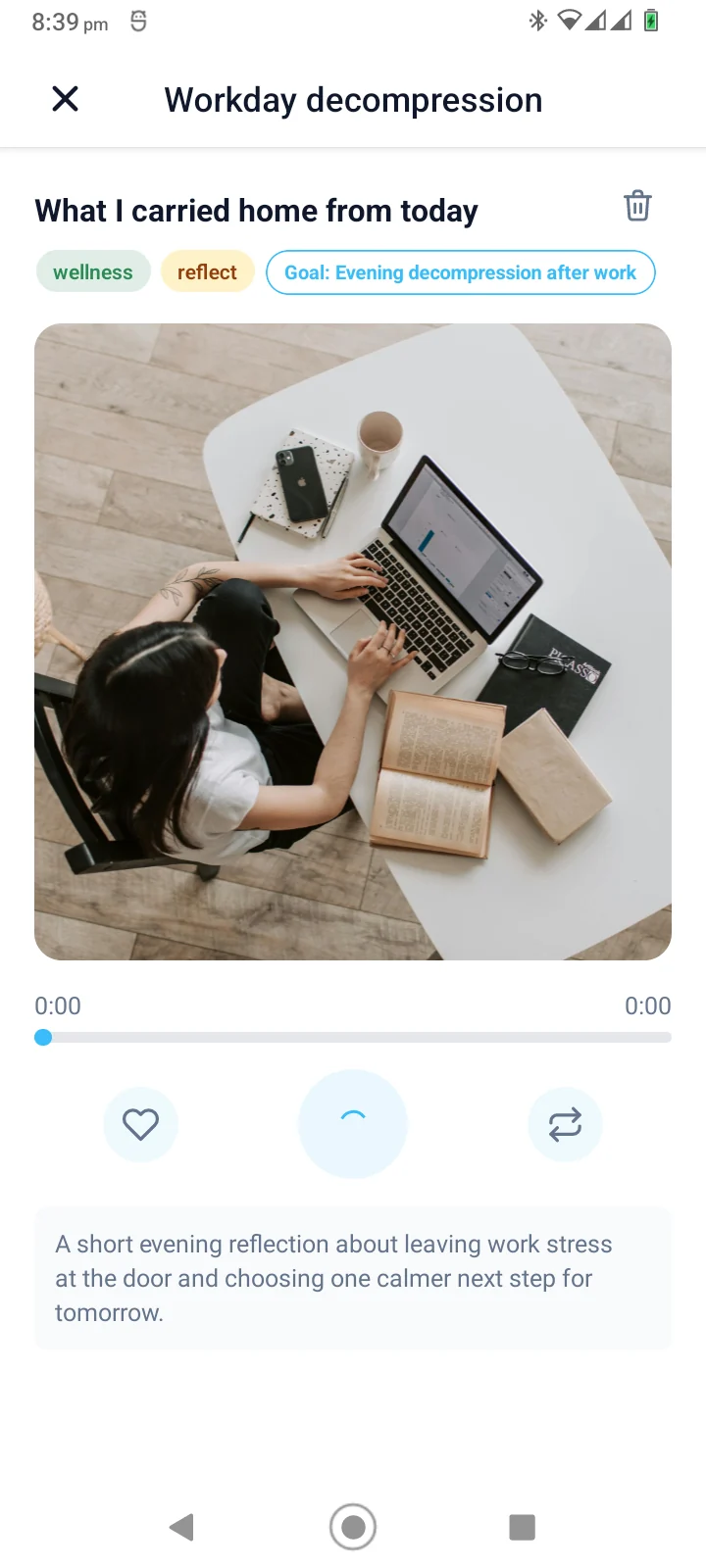
Create goals, record from inside a goal, and revisit the entries that JournPad automatically links there.
Use summaries, categories, and playback to return to important entries.
JournPad is built around voice capture. Open the app, tap the microphone, and speak naturally. The entry saves as audio, so you preserve the original tone, pauses, and emphasis that written notes often lose.
Unlike a text-only journal, JournPad keeps the recording. You can replay entries later to hear how you sounded in the moment, which can carry context that a summary might miss.
After recording, JournPad can generate a title, short summary, and category. This helps you scan spoken entries without manually labeling everything. The original audio remains available when you want the full detail.
Voice works well when you are walking, decompressing after work, processing an emotion, or talking through a decision. JournPad fits those moments because capture is fast and review happens later.
JournPad is voice-first: the audio remains the primary journal record. Generated titles and summaries make the spoken entry easier to revisit without turning it into a written-note workflow.
The exact routine can stay simple. Start with a voice entry, then let the product structure help when you return to review.
Some people prefer speaking over typing but need a way to review and organize voice entries. Open JournPad and record the thought in your own voice.
After saving, use the generated title, short summary, and category as a review layer. These helpers are useful labels, not perfect interpretations.
Replay the original audio when tone matters, browse entries by recording date in Day, Week, or Month views, and return to goal-linked entries from the goal where they were created.
Answers to common questions about using JournPad for this kind of voice journaling.
JournPad supports voice-first reflection with recording, audio playback, and AI-generated titles, summaries, and categories for when speaking fits the moment.
Yes. JournPad saves voice entries as audio, and users can replay saved entries from the entry detail view.
Users can create goals with categories and reminders. A new voice entry started from inside a goal is automatically linked to that goal, where its linked entries can be reviewed and played back.
No. JournPad is a journaling and reflection app. It is not therapy, medical care, coaching, or professional advice.
Keep exploring JournPad by product workflow, practical routine, or supporting education.